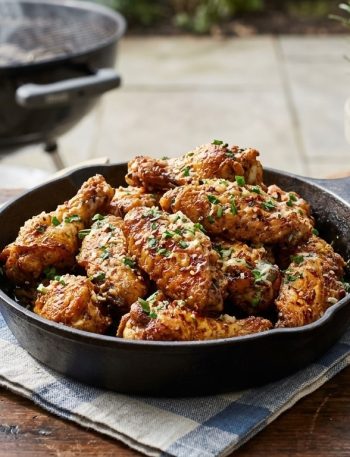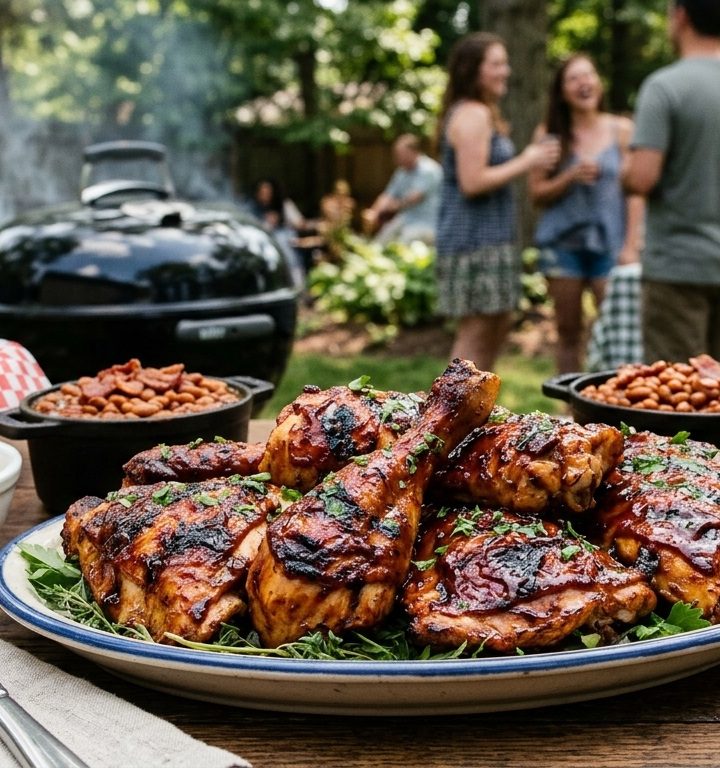
Few dishes encapsulate the raw, nostalgic joy of outdoor cooking quite like Classic Barbecued Chicken. Achieving pitmaster-level results on the grill requires more than just slathering on sauce over open flames; it demands an understanding of heat zones, sugar caramelization, and thermal mass management. When executed properly, this recipe yields smoky, tender chicken with deeply lacquered skin and crisp, charred edges that never taste burnt.
In this comprehensive 1,500-word culinary guide, you will master the art of making Classic Barbecued Chicken entirely from scratch. We will cover the mechanics of two-zone grilling, sauce application chemistry, spice rub selection, ideal side dish pairings, and complete nutritional facts.
The Science of Grilling Perfect BBQ Chicken
Grilling chicken coated in sugar-rich sauce presents a classic culinary trap: burning the sauce before the interior meat reaches a safe internal temperature. Mastering this dish comes down to managing heat transfer and moisture retention.
[Dry Brine & Spice Rub] -> [Indirect Heat Searing] -> [Lacquered Sauce Application] -> [Direct Heat Crisp]
1. Two-Zone Heat Control
Placing raw chicken directly over high heat causes dripping fat to ignite flare-ups, scorching the skin while leaving the inside raw. Establishing a two-zone grill setup (direct high heat on one side, indirect medium heat on the other) allows you to gently cook the chicken through via indirect convection heat before finishing over direct flames.
2. The Sugar Burn Threshold
Most commercial barbecue sauces contain high amounts of molasses, brown sugar, or honey. Sugar begins to burn rapidly at temperatures above 320°F (160°C). Applying sauce at the start of grilling causes it to char into a bitter, black crust long before the chicken is done. Sauce should only be layered on during the final 10 to 15 minutes of cooking.
Why You Will Love Classic Barbecued Chicken
- Authentic Pitmaster Flavor: Delivers balanced smoky, sweet, tangy, and savory notes without complex competition setups.
- Juicy & Tender Meat: Indirect roasting traps interior moisture while rendering fat naturally.
- Stunning Glaze Finish: Multiple light coats of sauce create a glossy, mahogany shell.
- Ideal for Crowds: Easy to scale up for summer cookouts, block parties, or family gatherings.
Essential Kitchen & Grilling Equipment for Classic Barbecued Chicken
Gather these fundamental tools before firing up the grill for your Classic Barbecued Chicken:
- Charcoal or Gas Grill: Capable of maintaining a steady two-zone heating environment.
- Instant-Read Digital Meat Thermometer: Eliminates guesswork by measuring exact internal temperatures.
- Silicone Basting Brush: Applies smooth, even coats of barbecue sauce without stripping off dry rub.
- Long-Handled Grill Tongs: Allows safe turning and movement of meat over hot coals.
- Chimney Starter (for charcoal grills): Lights coals cleanly without lighter fluid chemical smells.
Key Ingredients for Classic Barbecued Chicken
Gather these fresh staples and pantry essentials:
1. Main Poultry Base
- 3.5 to 4 lbs bone-in, skin-in chicken pieces (a combination of thighs, drumsticks, and split breasts).
- 1 tablespoon vegetable oil or avocado oil (high-smoke-point oil for binding).
2. Pitmaster Dry Rub Seasoning
- 1 tablespoon brown sugar.
- 1 tablespoon smoked paprika.
- 1 teaspoon garlic powder.
- 1 teaspoon onion powder.
- 1 teaspoon coarse kosher salt.
- 1/2 teaspoon cracked black pepper.
- 1/4 teaspoon cayenne pepper (optional, for mild warmth).
3. Classic BBQ Sauce Glaze
- 1.5 cups classic tomato-based barbecue sauce (homemade or high-quality store-bought).
- 2 tablespoons apple cider vinegar (brightens the glaze).
- 1 tablespoon yellow mustard.
you can cook this recipe by using this item

Step-by-Step Culinary Breakdown for Classic Barbecued Chicken
Step 1: Prep and Dry-Brine the Chicken
Pat all chicken pieces completely dry using paper towels. Moisture on the skin prevents proper crisping and spice adhesion. Rub the chicken lightly with vegetable oil. Combine brown sugar, smoked paprika, garlic powder, onion powder, salt, black pepper, and cayenne in a small bowl. Liberally season all sides of the chicken with the spice rub. For best results, let the seasoned chicken sit at room temperature for 20 to 30 minutes (or refrigerate uncovered overnight for maximum dry-brining).
Step 2: Set Up a Two-Zone Grill
Prepare your grill for two-zone cooking:
- Charcoal Grill: Bank hot, ash-covered coals onto one side of the grill, leaving the other half empty.
- Gas Grill: Turn two burners on medium-high heat and leave the remaining burner completely off.
Aim for an ambient grill lid temperature of 350°F to 375°F (175°C to 190°C). Clean and oil the grill grates.
Step 3: Indirect Slow Roast
Place the seasoned chicken pieces skin-side up on the cooler, indirect side of the grill. Cover with the grill lid, positioning the top vents directly over the chicken to draw smoke across the meat. Cook undisturbed for 30 to 40 minutes. Split breasts cook faster than thighs, so monitor larger pieces closely.
Step 4: Check Internal Temperatures
Remove the lid and insert an instant-read meat thermometer into the thickest part of the meat without touching bone. Target temperatures before saucing:
- Chicken Breasts: 150°F to 155°F (65°C to 68°C).
- Chicken Thighs & Drumsticks: 165°F to 170°F (74°C to 77°C).
Step 5: Sauce and Glaze (The Final 10 Minutes)
Whisk the barbecue sauce, apple cider vinegar, and yellow mustard together in a small bowl. Brush a generous layer of sauce over all sides of the chicken. Move the sauced chicken pieces over to the direct-heat side of the grill, skin-side down. Grill for 1 to 2 minutes until the sauce bubbles and caramelizes slightly. Flip, apply a second coat of sauce, and cook for another 1 to 2 minutes.
Step 6: Rest and Serve
Transfer cooked chicken to a clean platter. Final internal temperatures should reach 165°F (74°C) for breasts and 175°F to 180°F (80°C to 82°C) for thighs (thighs benefit from higher heat to break down connective tissue). Cover loosely with aluminum foil and let rest for 8 to 10 minutes before serving.
Grilling Time & Temperature Parameters for Classic Barbecued Chicken
| Chicken Cut | Heat Zone | Grill Temp | Total Cook Time | Target Doneness Temp |
| Bone-In Thighs | Indirect then Direct | 350°F–375°F | 35–45 Minutes | 175°F–180°F |
| Drumsticks | Indirect then Direct | 350°F–375°F | 30–40 Minutes | 175°F–180°F |
| Split Breasts | Indirect then Direct | 350°F–375°F | 30–35 Minutes | 165°F |
| Boneless Thighs | Indirect then Direct | 375°F | 18–22 Minutes | 170°F |
7 Secret Tips for Perfect Classic Barbecued Chicken
- Use Two-Zone Heat: Cooking entirely over direct flames burns the skin before the center cooks through. Indirect heat does the heavy lifting.
- Never Sauce Too Early: Applying sugar-heavy sauce before the final 10 minutes leads to charred, bitter meat.
- Rely on Bone-In, Skin-On Cuts: Bones conduct heat evenly while skin bastes the interior meat with natural fats during roasting.
- Pat Meat Completely Dry: Removing surface moisture allows oil and spices to form a crisp barrier under the sauce.
- Layer Sauce in Thin Coatings: Brush two or three thin layers of sauce rather than one thick layer for a glossy, lacquered glaze.
- Thin Sauce with Vinegar: Adding apple cider vinegar to thick commercial sauce prevents it from clumping and burning too quickly.
- Always Rest Meat: Resting allows muscle fibers to relax, redistributing juices throughout the meat rather than spilling onto the cutting board.
Classic Side Dish Pairing Ideas
Complete your summer cookout with these timeless barbecue side dishes:
- Creamy Potato Salad: Yukon gold potatoes dressed with mayo, mustard, celery, and fresh dill.
- Southern Style Cornbread: Warm, golden cornbread baked in a cast-iron skillet with honey butter.
- Grilled Corn on the Cob: Charred sweet corn brushed with melted butter, cotija cheese, and smoked paprika.
- Crispy Southern Coleslaw: Shredded cabbage and carrots tossed in a tangy vinegar-mayo dressing to cut through rich BBQ sauce.
Estimated Nutritional Breakdown
Per Serving (Serves 4 - approx. 2 pieces per serving):
| Nutrient | Amount | % Daily Value* |
| Calories | 460 kcal | -- |
| Total Fat | 22 g | 28% |
| Saturated Fat | 6 g | 30% |
| Cholesterol | 140 mg | 47% |
| Sodium | 780 mg | 34% |
| Total Carbohydrates | 24 g | 9% |
| Total Sugars | 20 g | -- |
| Protein | 42 g | 84% |
Storage & Reheating Instructions
- Refrigeration: Store leftover barbecue chicken in an airtight container in the refrigerator for up to 3 to 4 days.
- Reheating: Place chicken on a wire rack set inside a baking sheet. Reheat in a 350°F (175°C) oven for 12 to 15 minutes until warmed through and skin crisps up. Brush with a fresh light layer of warm BBQ sauce before serving.
Frequently Asked Questions
Can I make this Classic Barbecued Chicken in the oven?
Yes! Roast the seasoned chicken on a wire rack set inside a baking sheet at 375°F (190°C) for 35 to 40 minutes. Brush with sauce and turn your oven broiler to HIGH for 2 to 3 minutes to caramelize the glaze.
Why is my BBQ chicken skin rubbery?
Rubbery skin results from cooking over low heat without direct searing or failing to dry the skin prior to seasoning. High indirect heat combined with a quick direct-heat sear crisp up the rendered skin.
Conclusion
This Classic Barbecued Chicken recipe proves that master-level barbecue relies on simple heat management and crisp timing. By utilizing a two-zone fire and layering sauce during the final minutes of grilling, you enjoy tender, juicy chicken encased in a perfectly caramelized glaze every time!